

Introduction: Hair transplantation in a specialized clinic; from consultation to final result
Hair transplantation is one of the most popular and effective methods for treating hair loss and restoring a person’s natural appearance. However, the success of this method is not limited to the skill of the doctor alone; it is also a process of initial consultation, selection of the appropriate method, design of the hairline, precise implementation of the transplantation, and post-operative care. In this article, we will review all the stages of hair transplantation in a specialized clinic so that you know what happens before, during, and after the operation and what results you can expect.
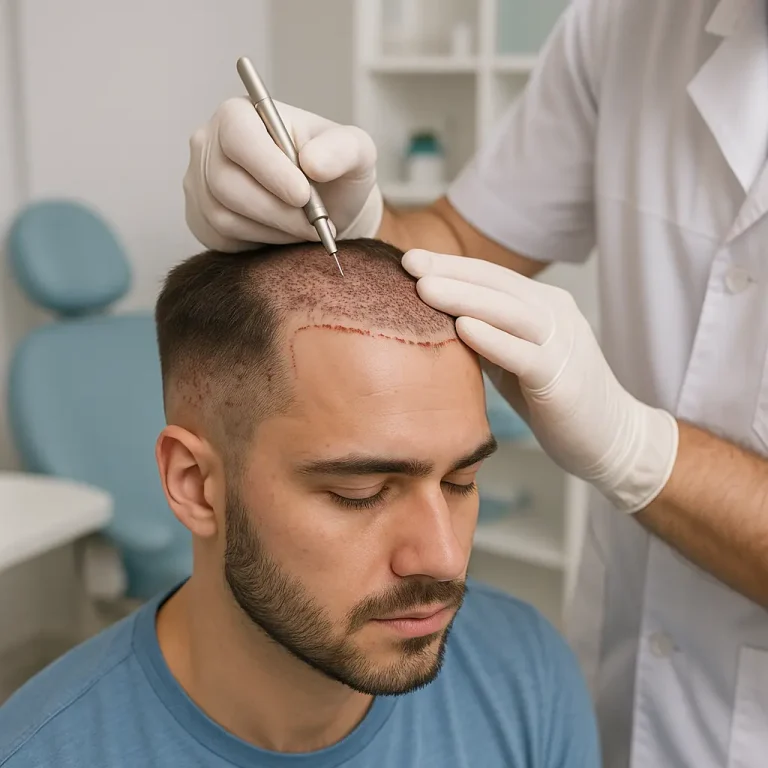
💎1. What is hair transplantation?
Natural hair transplantation is a minimally invasive surgical procedure in which healthy hair follicles are taken from the hair bank area (usually the back of the head) and transferred to the thinning or balding area.
This is done today with very precise methods such as FUE, FIT, SUT, DHI or a combination, and the results will be completely natural and lasting.
💎2. Why is it important to choose a hair transplant in a specialized clinic?
Choosing a specialized hair transplant clinic is the first and most important step to achieving ideal results.
A reputable center should:
Have an experienced and licensed medical team
Provide modern and sterile equipment
Conduct complete consultation sessions
Be with the patient before and after the procedure
Provide real and authentic samples
🔹3. First step: Specialized hair transplant consultation at a specialized clinic
Consultation is the most important part of hair transplantation. During the consultation:
The main cause of hair loss is determined
The condition of the hair bank is examined
The appropriate density is selected
The appropriate method is recommended
The cost and number of grafts required are determined
In professional clinics, consultants use hair scanning devices to accurately examine the condition of the scalp. This allows for the best possible result for the individual.
🔹4. Second step: Checking the hair bank at a specialized clinic
The hair bank is located at the back of the head or around the ears and is usually resistant to loss.
Your doctor will determine if you are a good candidate by examining the following:
Hair density
Hair shaft thickness
Follicle health
Extent of baldness
If the hair bank is weak, alternative methods such as hair transplants or hair augmentation may be recommended.
🔹 5. Step Three: Choosing the best hair transplant method in a specialized clinic
Specialized clinics choose one of the following methods depending on the individual’s conditions:
1. FUE (Follicle Unit Extraction) method
Single follicle extraction
Shorter recovery period
Suitable for medium density
2. FUT (Strip) method
Strip extraction from the back of the head
Suitable for people with a strong hair bank
Higher density
3. SUT method
Removal with a machine
Higher speed, greater accuracy
4. DHI method
Direct implantation with an implanter pen
No incision
More natural appearance of the hairline
🔹6. Step Four: Designing the Natural Growth Line
One of the most important steps in hair transplantation is designing the hairline. If this line is designed unprofessionally, the result will be unnatural and artificial.
The specialist doctor takes the following into account when designing:
The patient’s age
The shape of the forehead and face
The density and volume of the hair bank
The natural hair growth pattern
💎7. Fifth step: Performing hair transplantation in a specialized clinic
The steps of performing a hair transplant in the clinic include:
1. Patient preparation
Local anesthesia
Scalp disinfection
Identifying the harvesting and planting areas
2. Graft harvesting
In this step, healthy follicles are extracted from the hair bank.
3. Graft preparation
The grafts are examined and sorted under a microscope so that the healthiest ones are planted.
4. Planting in the new area
The angle, nap, direction, and density of the hair are carefully designed so that the result is completely natural.
💎 8. Step Six: Post-implantation Care
Basic care plays an important role in the success of the implant:
Do not wash for 48 hours
Avoid heavy activity for a week
Use special sprays
Sleep at a 45-degree angle
Avoid scratching the implant area
Take medications prescribed by your doctor
💎 9. Step 7: View the final result
The final result of hair transplantation is usually visible between 6 and 12 months.
Hair Growth Timing
Month 1 to 3: Temporary Loss (Shock Loss)
Month 3 to 6: Hair begins to grow
Month 6 to 9: Increased density
Month 9 to 12: Final Result
The final result varies from person to person, but in specialized clinics, the density and appearance will be very natural.
💎10. Cost of hair transplantation in specialized clinics
Selected method (FUE, SUT, DHI, etc.)
Amount of baldness
Number of grafts required
Doctor’s experience and skills
Clinic equipment
Usually, the cost of hair transplantation in Iran varies (you can customize the number according to your clinic).
💎11. How to choose the best hair transplant clinic?
To choose a reputable clinic:
See real samples
Make sure they have official licenses
Talk to a few previous patients
Check the methods used
Check the clinic environment for sterilization
🌟 Conclusion
Hair transplantation in a specialized clinic involves several meticulous steps from consultation to post-operative care. Each of these steps plays an important role in achieving a natural, thick and permanent result. If you are looking for a reliable treatment for hair loss, it is best to have a specialized consultation with a reputable clinic and choose the right method.
Frequently Asked Questions Everything about Hair Transplantation
❓1. Is hair transplantation permanent?
✔ Yes, if the hair bank is suitable and appropriate methods such as FUE/DHI are used.
❓2. How long does it take to fully recover?
✔ About 6 to 9 months for real results to appear.
❓3. What is the best age for hair transplantation?
✔ The best returns have been recorded between 25 and 45 years.
❓4. Does hair transplantation hurt?
✔ No — It is performed with local anesthesia.
No comment